
By the sr4 Partners Team
Today’s workplace is defined by ongoing complexity rather than one-time disruption. Organizations are operating across distributed teams, rising expectations for inclusion, and fast-moving market shifts that require continuous adaptation.
For senior leaders, this creates both responsibility and opportunity. Success no longer comes from managing through short-term pressure alone. It requires leaders who can help teams adapt, stay aligned, and move toward what business thinker Seth Godin describes as transformative success.
Why Senior Leaders Must Focus on Holistic Leadership
It is important to develop stronger leaders. At sr4 Partners, we call this holistic leadership. Over the past decade, we have helped Fortune 100 companies, high-growth startups, and nonprofits embrace this approach. Holistic leaders tap into both competence and character to advance human and organizational potential.
- Competence is the what: delegation, communication, strategic thinking, and decision-making.
- Character is the how: humility, self-awareness, empathy, and integrity.
Too often, organizations invest heavily in building skills but neglect character. Yet leadership without character erodes trust, culture, and long-term results. The most effective leaders bring both together. When competence and character align, the impact on organizational health is enormous.
Leadership Development Must Be Continuous
Holistic leadership does not happen by accident. Talent and technical skills are not enough. The best leaders continuously build on a strong foundation of competence and character through ongoing learning and development.
Traditional, one-off leadership trainings packed with slides and lectures simply do not work. Leaders at every level expect more relevant, engaging, and sustained development. And in today’s competitive environment, organizations cannot afford “check-the-box” learning.
Instead, senior leaders should invest in approaches that are practical, relational, and transformative. We recommend starting with three priorities:
1. Include Leaders at All Levels
Leadership does not belong only at the top. In today’s fast-changing world, influence flows in all directions. Individual contributors who lead informally, first-time managers, and senior executives all play a role in shaping culture and outcomes.
Static, one-size-fits-all programs cannot prepare such diverse leaders. A multi-faceted approach works better:
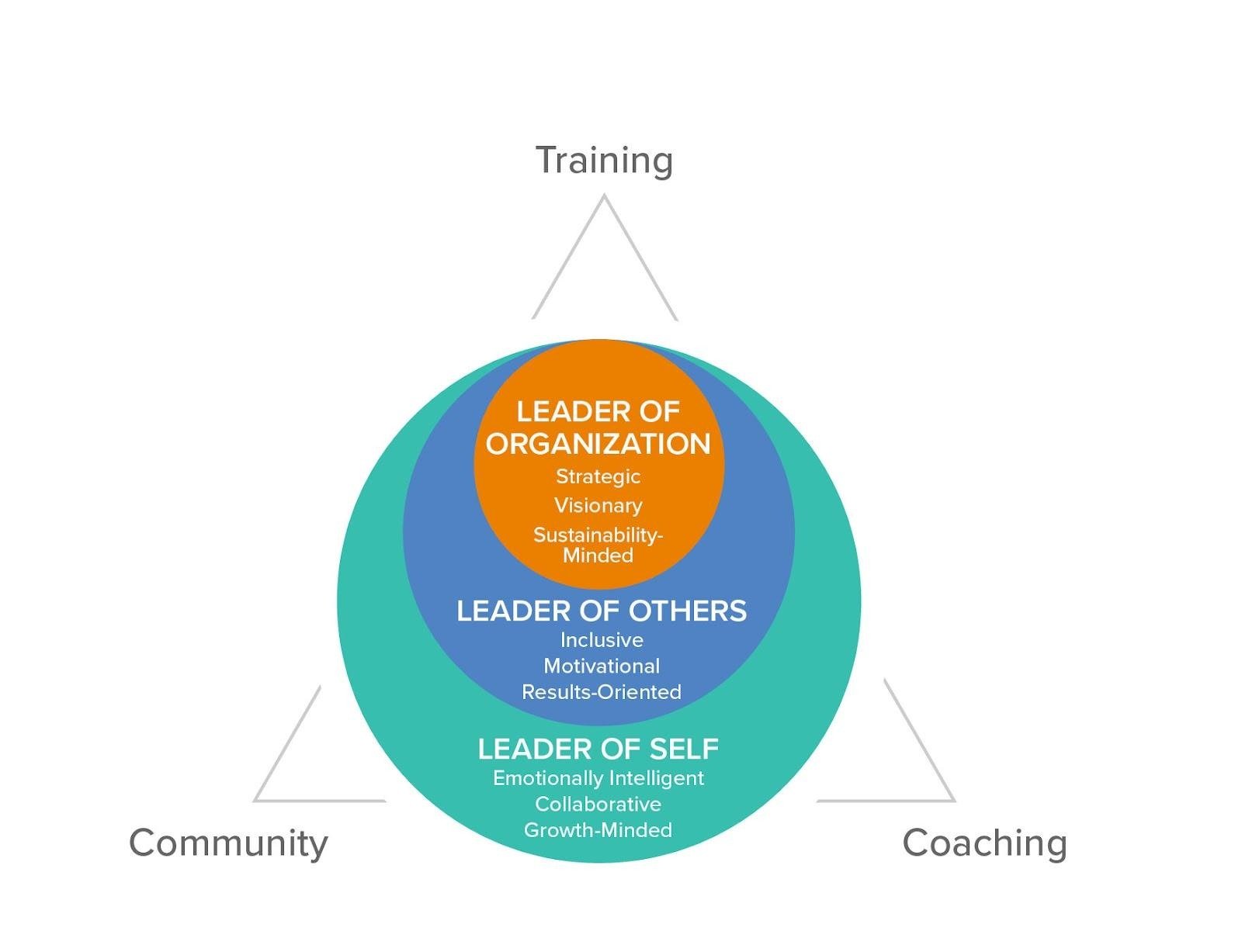
- Virtual instructor-led training
- Peer learning communities
- Executive and individual coaching
This blend supports leaders at every stage of their journey. They grow with the organization, and the organization grows with them.
2. Prioritize Peer Communities
Leaders often learn as much from one another as they do from experts. Peer communities allow leaders to share stories, reflect on mistakes, and exchange real-world strategies. Peer communities drive accountability, resilience, and connection. They also reinforce the human side of leadership, which is essential for organizational health.
3. Provide Experiential Learning Opportunities
Concepts inform. Experiences transform.
For example, a one-off diversity training may spark awareness. But putting hiring managers face-to-face with skilled immigrants and refugees to exchange stories creates perspective that lasts a lifetime.
Experiential learning can also thrive in virtual settings. Even small moments, such as using breakout rooms where participants share stories about meaningful mentors or challenges they have overcome, can deepen connection and insight.
These kinds of experiences help leaders internalize lessons, build character, and apply learning in authentic ways.
Final Thought for Senior Leaders
Leadership is never easy, and developing holistic leaders requires intention. But the value it brings to your organization cannot be overstated. When leaders combine competence and character, they strengthen culture, build trust, and drive performance, all of which are core elements of organizational health.
The question for senior leaders is not whether leadership development is important. The question is whether your organization is cultivating the kind of leadership that will carry you beyond survival toward lasting success.
–
At sr4 Partners, we believe developing holistic leaders is essential to organizational health.
If you are looking to build leadership capability that blends competence and character at every level, learn more through an upcoming training. You can also explore how sr4 can support you through a complimentary initial conversation.